Why the Same Cosmetic Glass Bottle Shows Color Variation After Coating
You approve a coated sample under office lighting. The shade matches the brand reference, and everyone signs off. Then the production batch arrives, three bottles stand side by side under retail shelving, and the difference appears: one reads slightly darker at the base, one leans grey, one shows a shadow at the shoulder.
Colour drift after secondary processing is one of the most common quality disputes in cosmetic packaging. It delays launches, and it strains the relationship between a brand and its supplier, because nobody can say with confidence where the variation entered the process.
The usual assumption is that the coating is at fault. In practice, shade variation on the same bottle design is almost always an interaction between the glass substrate, the wall distribution, the coating line, and the light the bottles are judged under.
1. The glass substrate: iron content and batch consistency
Glass is not an optically neutral canvas. Standard soda-lime glass carries natural iron oxides that leave a faint green or grey cast, and when a translucent or semi-opaque coating is applied over it, the substrate reads through the lacquer. A supplier that buys gobs or finished bottles from several upstream kilns inherits several base colours: the same paint lands muddy on one batch and clean on the next, and nothing in the paint formula explains why.
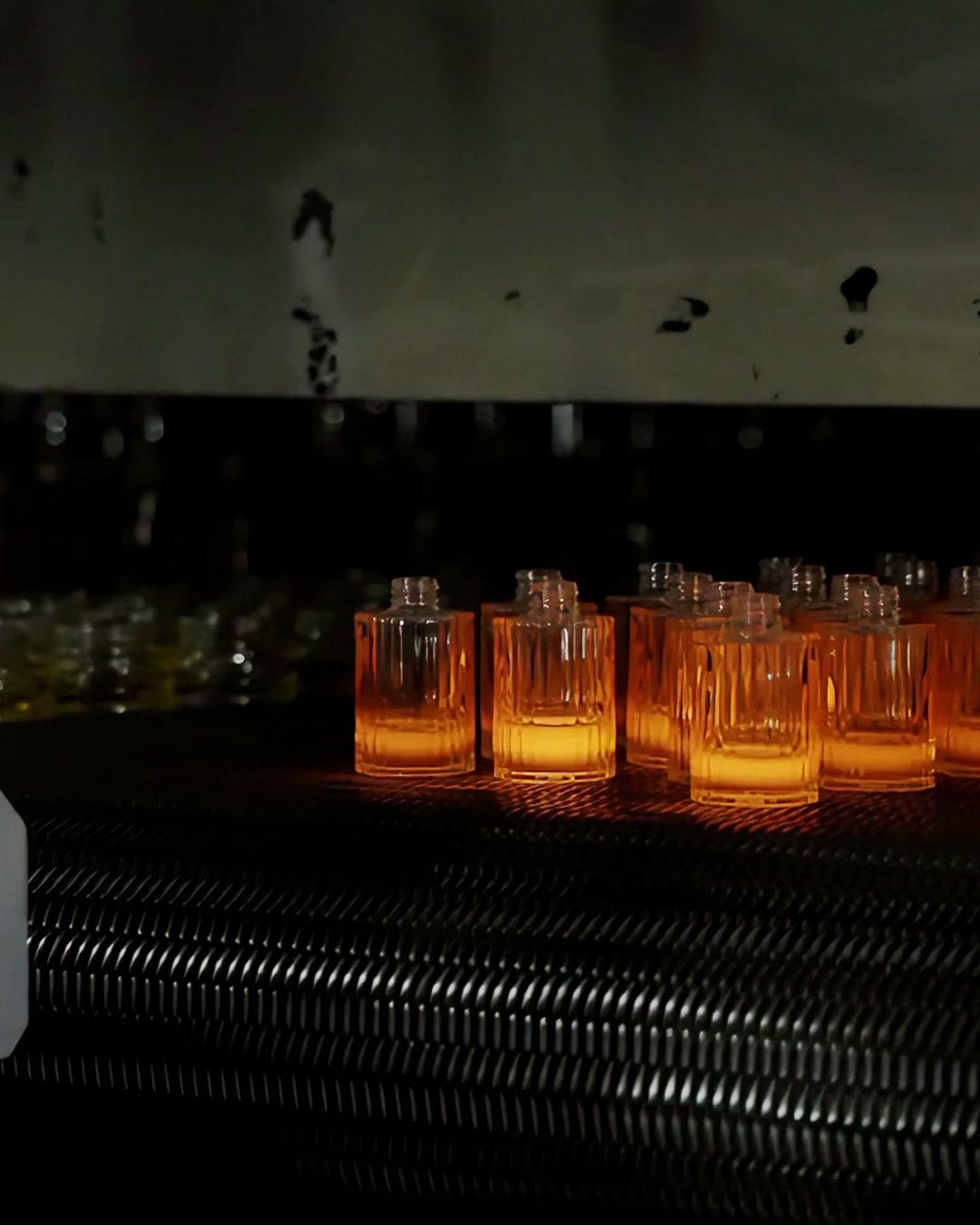
This is why Yijing melts its own glass. Three production bases — two in Guangdong, one in Anhui — run their own furnaces, with group melting capacity of roughly 282 tonnes of glass a day and about 730 people, forming cosmetic glass since 1998. Melting in-house is what lets a colour and clarity standard hold from the sample run to the reorder, instead of resetting with every upstream delivery.
2. Wall thickness and optical depth
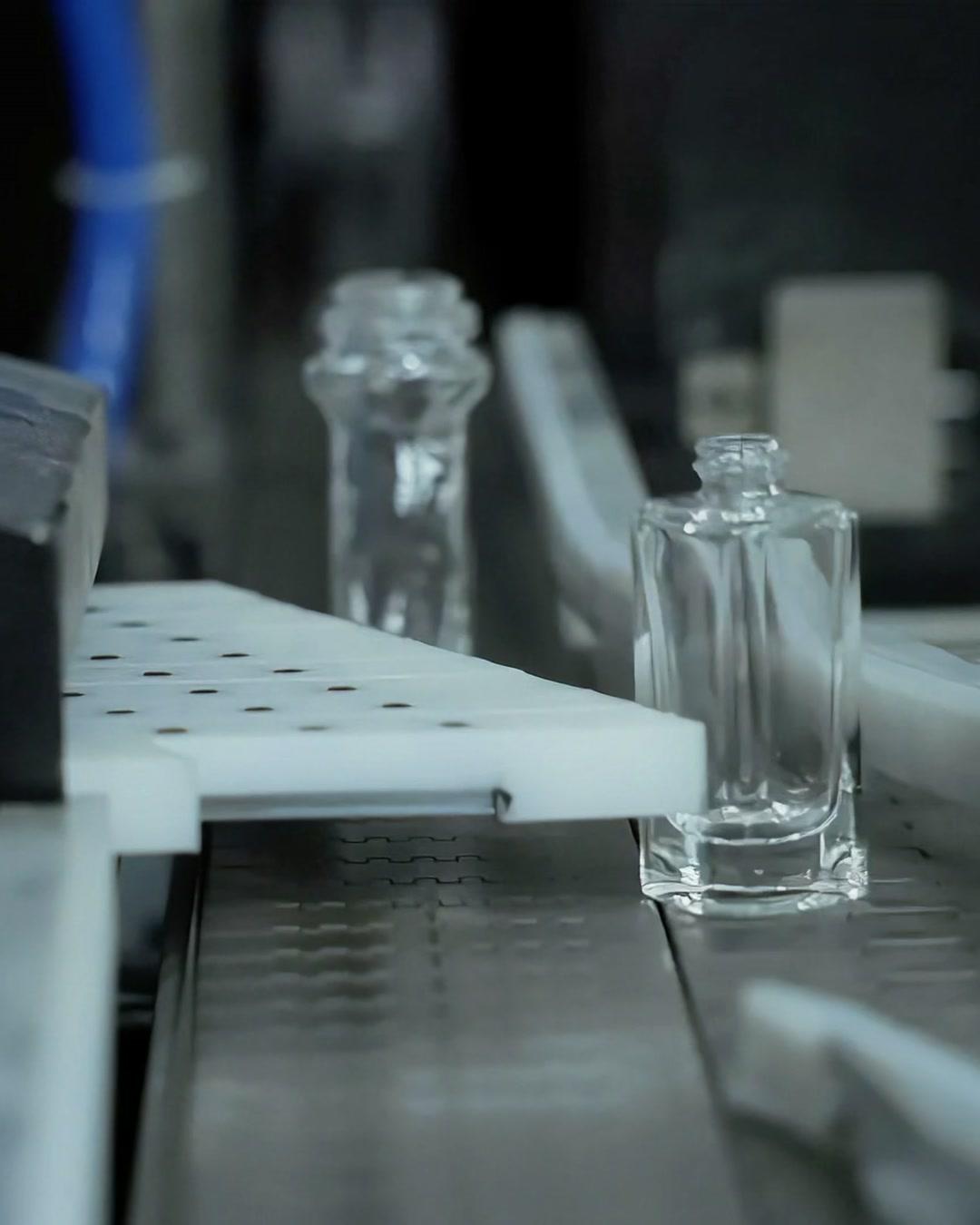
A cosmetic bottle is not a flat sheet. It has a shoulder, a wall and a heavy base, and the optical path through the glass changes where the wall thickens. Under translucent colour or a gradient finish, a thicker base absorbs more light and reads visibly darker than the shoulder; if wall distribution drifts between mould cavities, that shows up as bottle-to-bottle shade difference before the coating line is involved at all.
Wall distribution is a forming decision, not a decoration one. It is set by the mould and by how evenly the machine runs the gob into it — which is one reason two bottles with identical dimensions can look different in colour once they are coated.
3. Coating line control: film thickness and curing
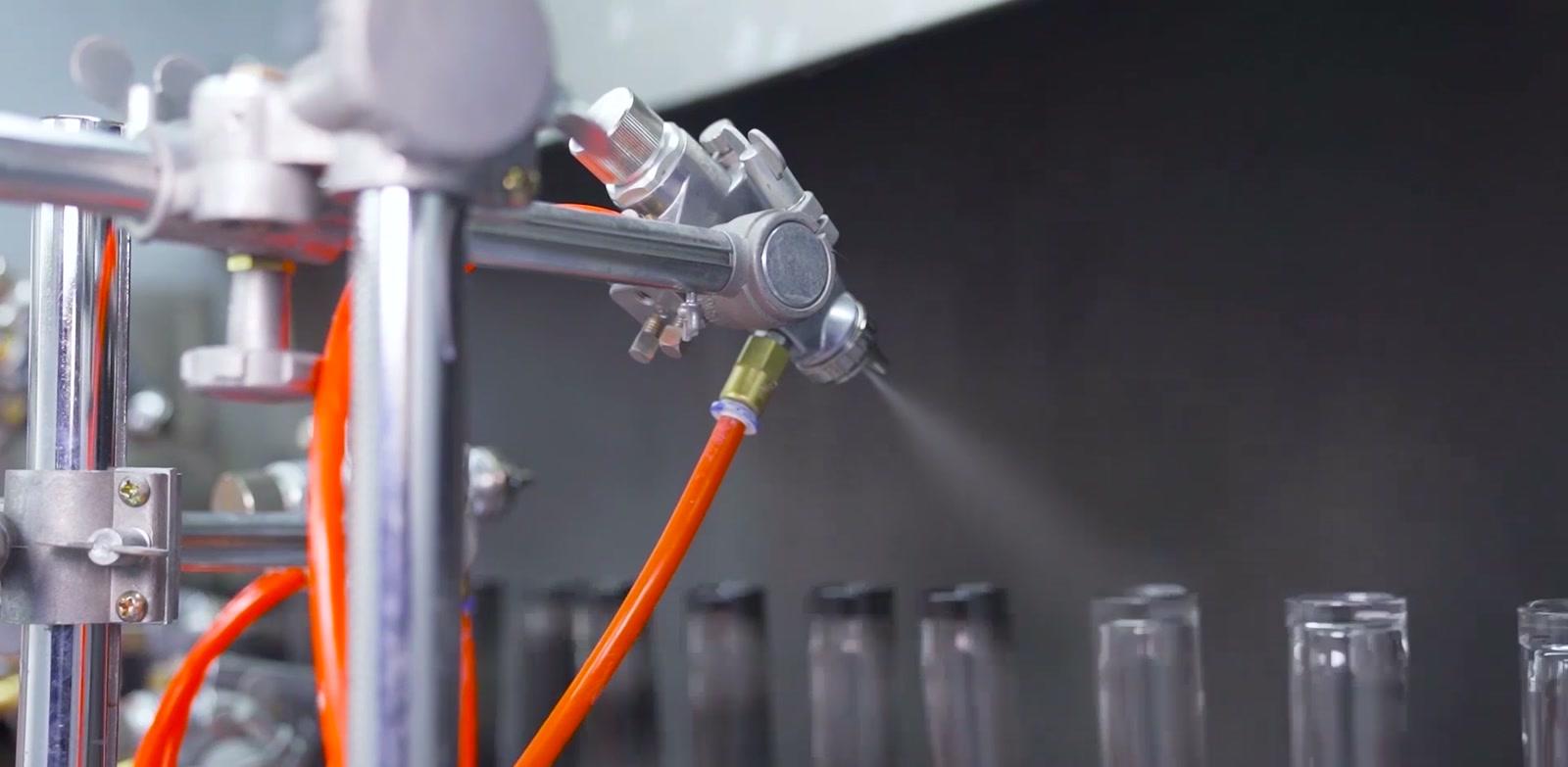
On an automated spray line the coating is measured in microns, and small drift in film thickness changes how saturated a colour reads. Uneven rotation on the jig, a change in conveyor speed, or an oven running a different temperature profile shifts the result across the surface of a single bottle, and between bottles in the same batch.
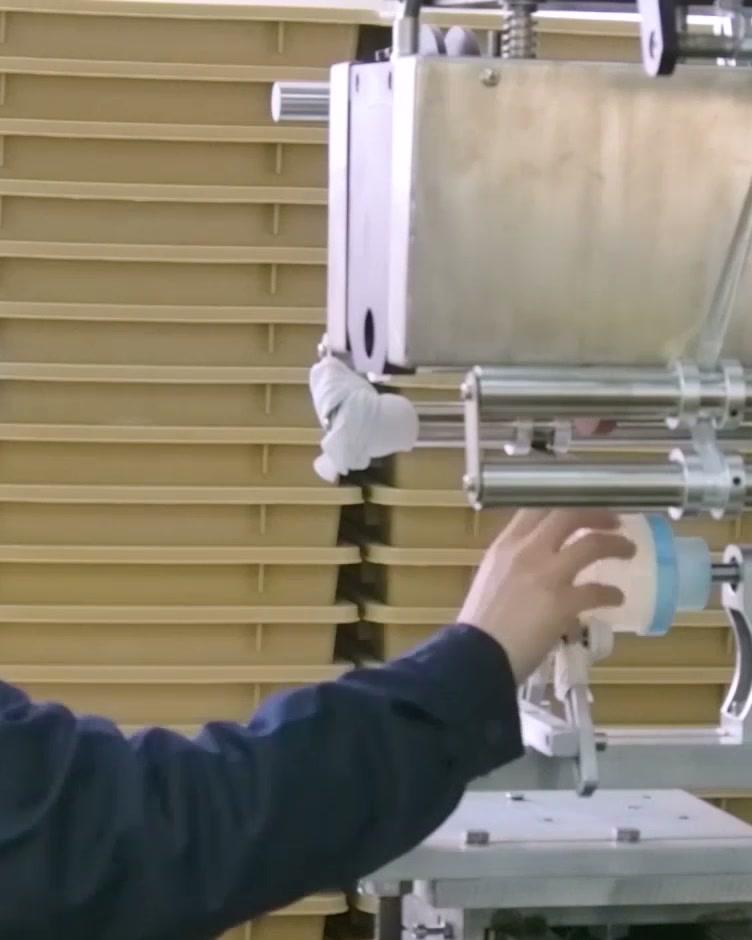
Spray coating at Yijing runs in the same building as the other eight decoration processes — inner and UV coating, silk screen printing up to six colours, frosting, hot stamping, decal, engraving, polishing and labelling. The bottle is not shipped out to a decorator and back, so when a colour drifts there is one party to correct it, and one place to check the film.
4. The viewing standard: which light, and empty versus filled
The last source of variation is the eye. Two colours that match under one light can separate under another: a shade approved in warm showroom light can read differently in daylight, which is why approval is normally taken under a defined source — D65 daylight with a stated viewing condition — and against a retained physical master sample rather than a screen.
Judging a bottle empty and judging it filled are also two different checks. A white lotion, a golden oil and a clear serum each change how the glass reads. A filled sample before the mass run closes that gap. A Pantone code on its own cannot, because the code describes ink, not glass.
Removing the risk before production
Colour risk is cheapest to remove at small volume, which is the practical argument for proving a colour on an existing shape first. Yijing runs two production routes. Stock moulds start at 200 pieces per SKU: the shape already exists and the tooling is paid for, so spray coating, frosting or silk screen can be proved on a proven bottle without tooling investment, and different SKUs cannot be combined to reach the minimum. New tooling starts at 10,000 pieces, because a mould has to be cut, proven and sampled before it runs.
On our products page every model carries a MOQ badge, and the green MOQ 200 badge marks the stock range — those are the models a colour trial can start from. The quality standard does not change between the two routes: a stock mould is not a lower grade, it is a mould someone already paid to prove.
Send the Pantone reference, the bottle silhouette and the finish you have in mind. We will come back with the closest stock mould, the decoration route that suits it, and a sample timeline before any production commitment. Samples and quotations: meta@yijing-glass.com, or www.yijing-glass.com.