Why Do Clear Perfume Bottle Bases Look Green?
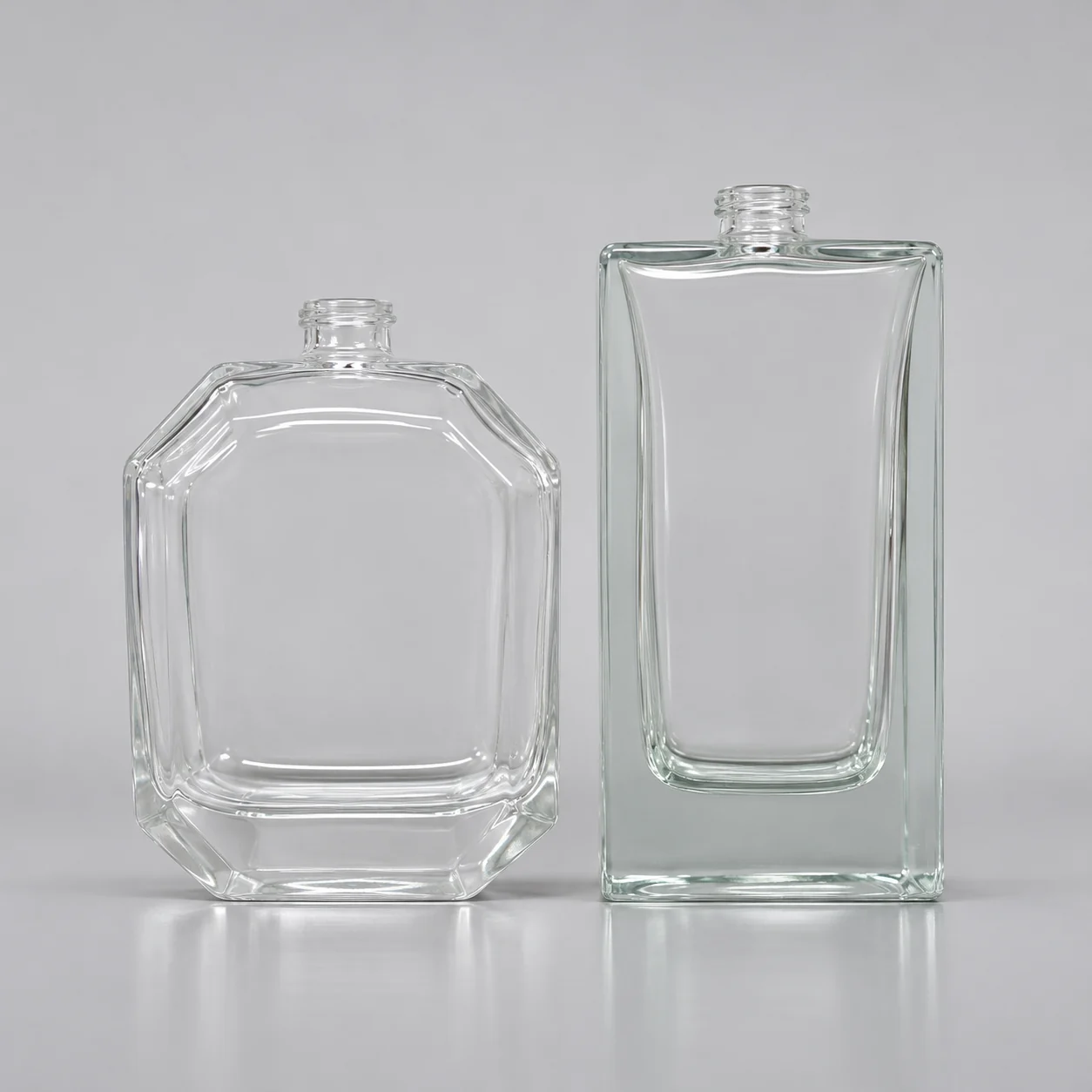
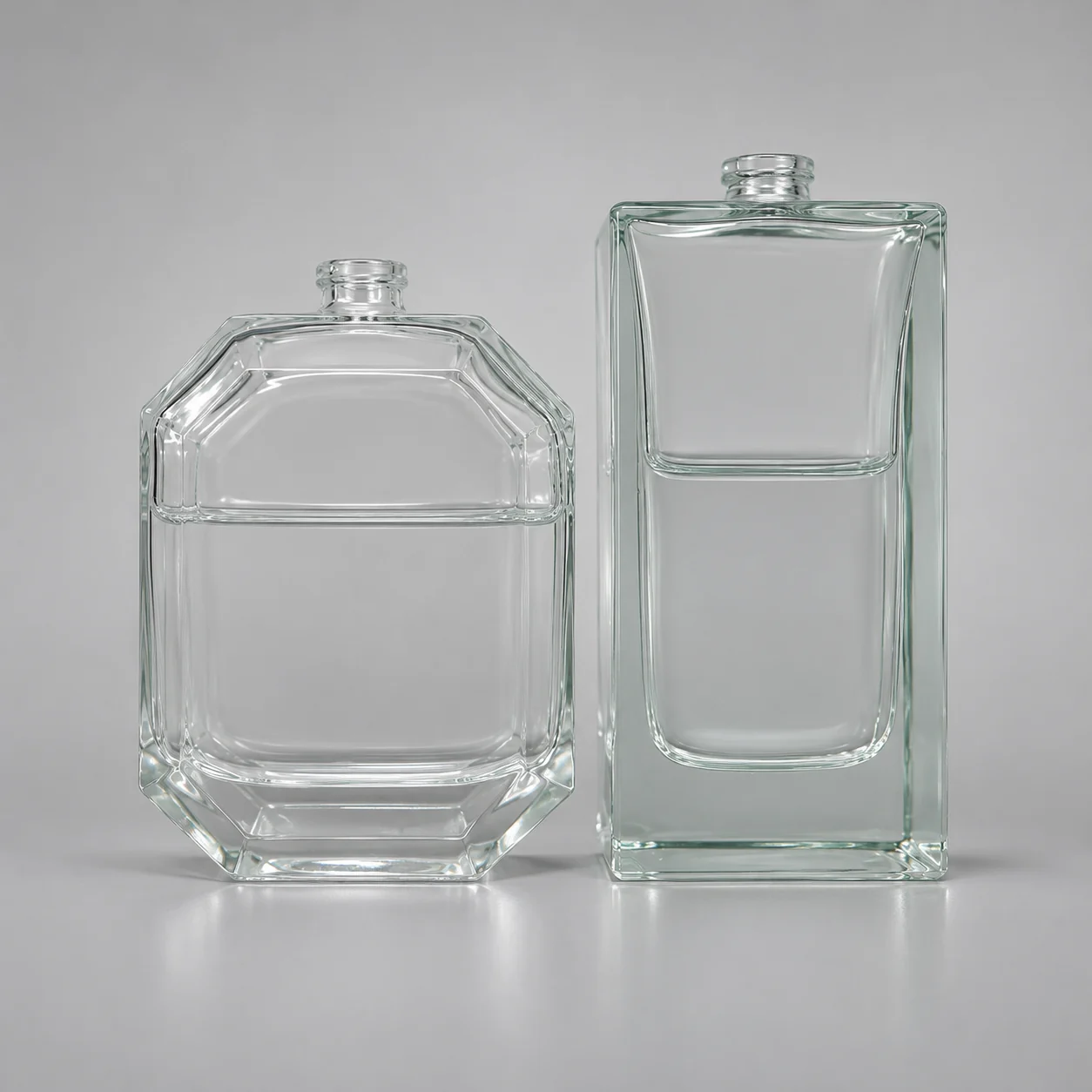
Look at the liquid level in the two samples below, then follow the sidewall down to the base. Both bottles hold transparent liquid, yet the glass at the bottom can look quite different. A buyer sees the color in the bottle before they smell the perfume. For a brand comparing flint and extra flint glass, clarity is part of how the fragrance itself will be judged. Yijing Glass specializes in high-white, high-clarity glass for perfume bottles and cosmetic packaging.
Why a thick glass base can look green
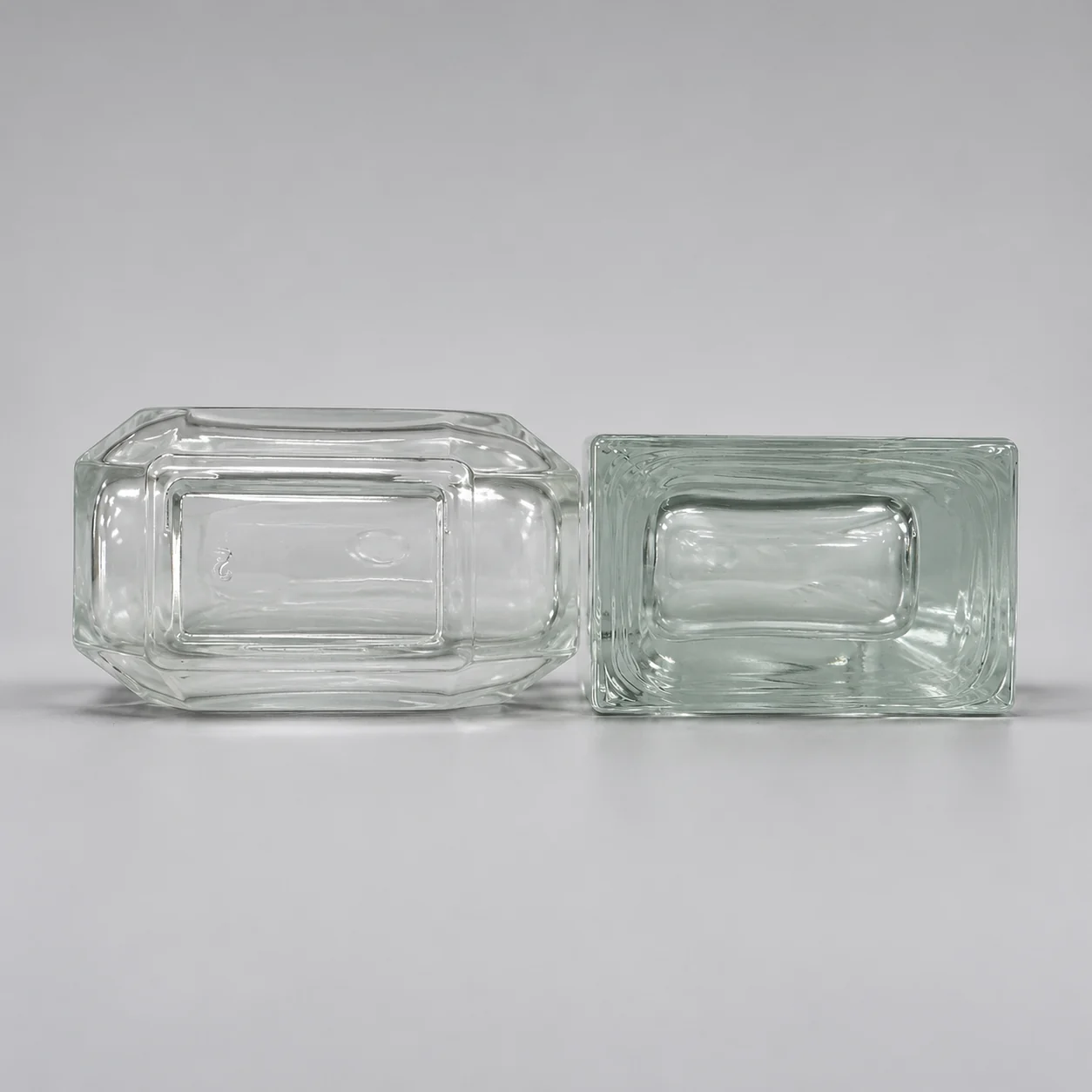
Small amounts of iron in clear glass can give it a green cast. Along a longer path through the glass, more light is absorbed and the tint can become easier to see. Turn a bottle over: the same glass that looks almost colorless through a thin wall may show color at a thick edge.
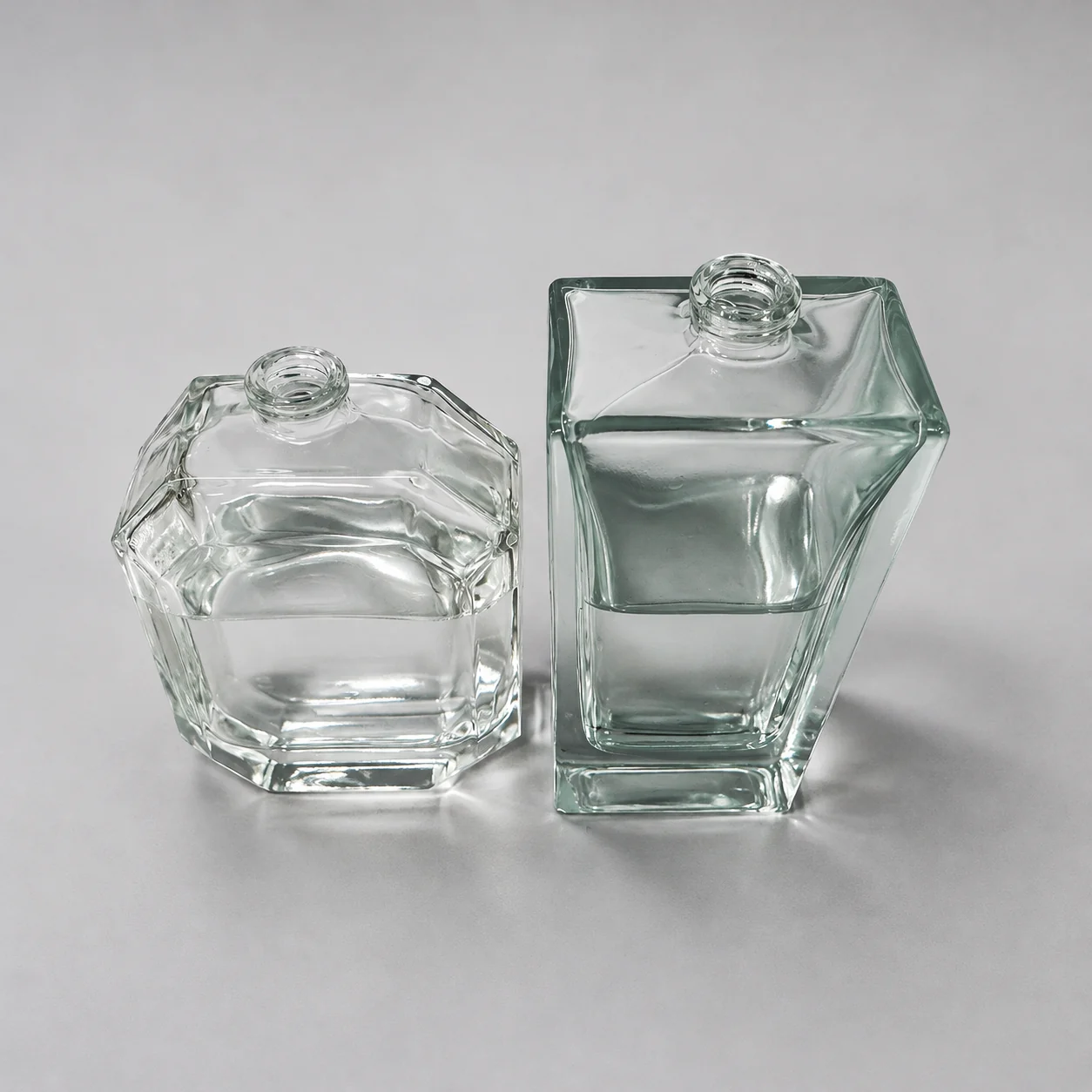
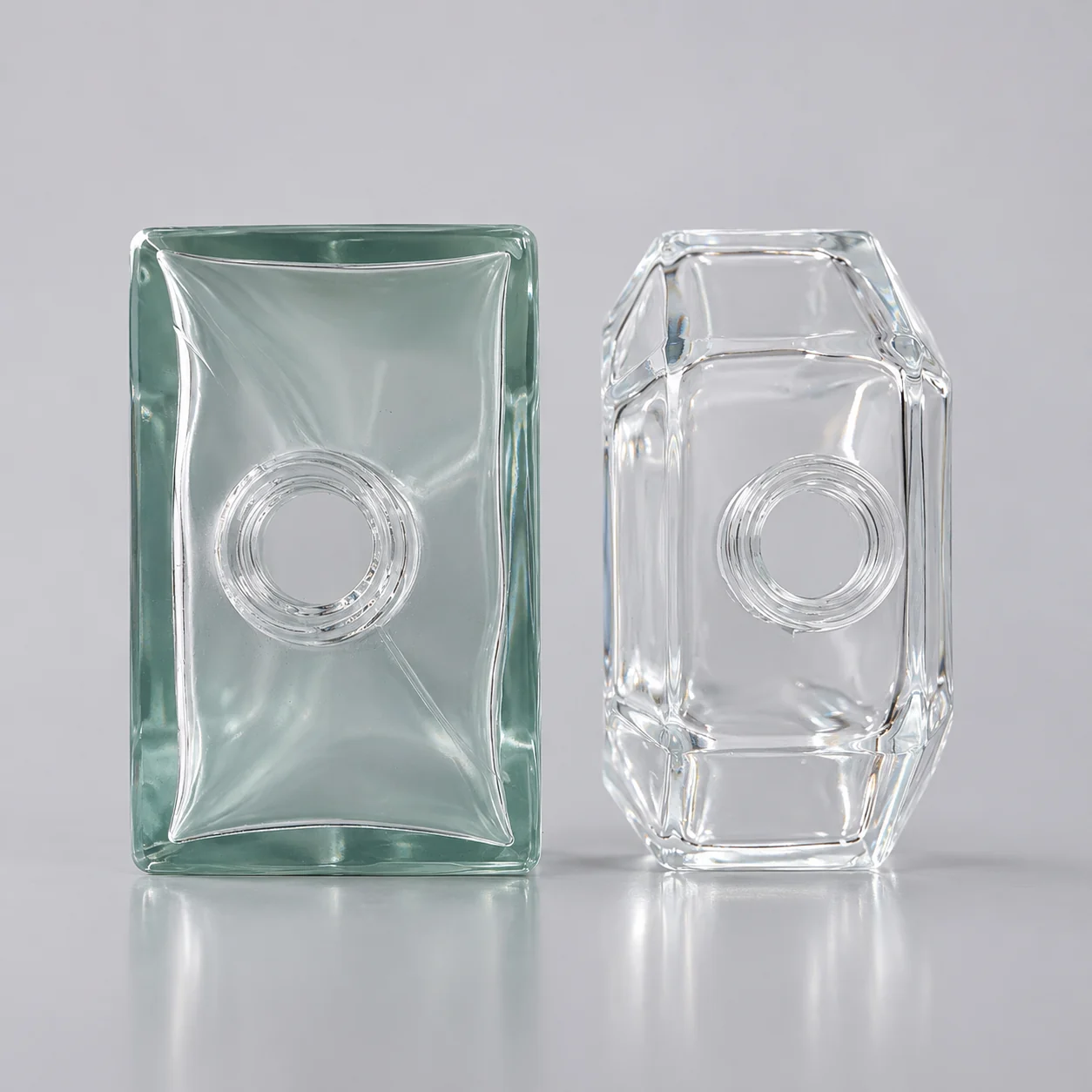
Look closely at the angled photograph in Figure 3. The sample on the right has visibly poorer glass clarity. As light passes through it, the transparent liquid looks dull and murky, almost like dirty water. That visual impression can weaken a fragrance brand’s quality signal and make shoppers question the formula, even when the liquid itself is clear. In the base view, the rectangular sample on the right shows the stronger green cast. Shape, base thickness, lighting and background all affect that comparison. To judge the material itself, ask for samples with the same geometry and comparable base thickness.
Flint, extra flint and super flint in perfume packaging
In container packaging, flint usually means clear glass. Suppliers may call a more neutral-looking glass extra flint, super flint or high-white glass, and perfume packaging catalogs may use the term extra white flint glass. Ask your supplier to explain its grade and identify a finished sample in your chosen shape and capacity. A name alone tells you little about how a heavy base will look under display lighting.
In the overhead photo below, the rectangular bottle is on the left. Look through the openings and compare the glass around the corners.
How to approve a filled perfume bottle sample
1. Place empty samples side by side on a neutral background. Compare the walls, corners and base from the front and underneath.
2. Fill both to the same level with your fragrance or a clearly identified test liquid. Keep a little of the same formula in a neutral reference glass. If it looks bright there but dull in the package, shortlist a higher-clarity bottle and repeat the comparison.
3. Fit the intended pump and cap. If you plan to spray or gradient-coat the glass, review the decorated sample under the lighting you will use for product photography or retail display.
4. Keep the approved filled sample and record its capacity, finish and lighting conditions so the next production sample can be reviewed on the same basis.